Rob Peace’s funeral and public memorial
The Short and Tragic Life of Robert PeaceRob Peace’s funeral and public memorial transform his death from a private family catastrophe into a crowded encounter among the many communities that had claimed, remembered, or misunderstood him. At St. Mary’s Church beside St. Benedict’s campus, more than four hundred people gather for an open-casket service, bringing together family, Newark-area residents, Yale students and professors, former customers, friends, and acquaintances from across the region. The ceremony honors Rob while making visible the distance between the identities he inhabited and the incomplete knowledge others possessed of him.
Identification and Arrival
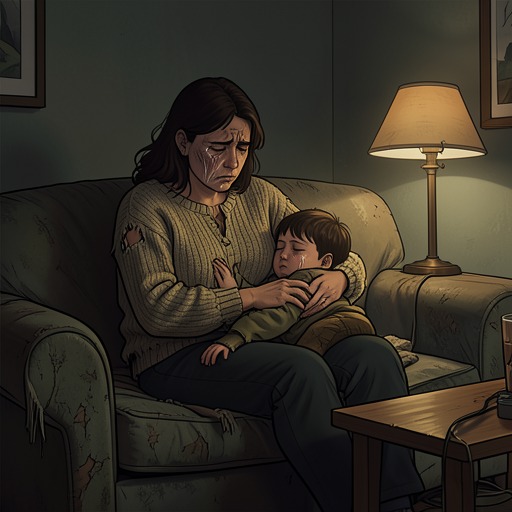
In the morning after Rob’s death, Jackie Peace receives a call from the police asking her to identify a body believed to be Robert DeShaun Peace. She drives to the city morgue, following nearly the same route she had once taken when bringing Rob to St. Benedict’s Preparatory School. In the cold, chemical-smelling room, the coroner folds back the white sheet, and Jackie confirms that the body is her son’s, calling him Shawn. She then drives directly to work, carrying the recognition of his death into the ordinary obligations that cannot pause for grief.
The public memorial follows after the news begins to reach Rob’s Yale circle. Victor Raymond asks Jeff Hobbs to help notify Yale friends, explaining that Rob has died and apologizing for having to deliver the news through Facebook. The message reflects the fractured nature of Rob’s social world: even his closest surviving friends do not possess a complete map of the people who knew him, and the effort to assemble mourners becomes an act of reconstruction.
The Gathering at St. Mary’s
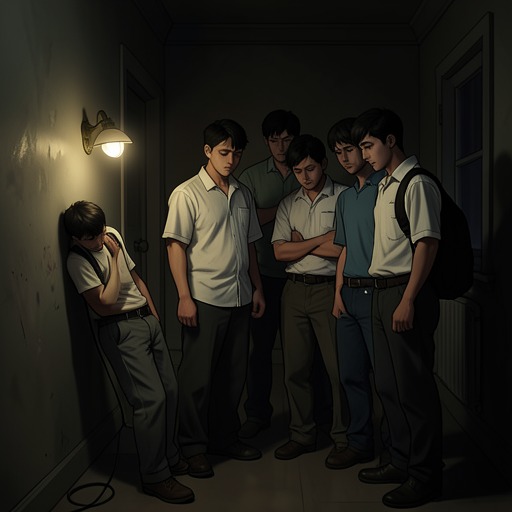
The funeral takes place at St. Mary’s Church, adjoining the St. Benedict’s campus where Rob’s adolescence had been shaped. The line for the viewing stretches two blocks along Martin Luther King Jr. Boulevard and forms an unusually diverse assembly. Yale students and professors stand alongside residents of the townships surrounding Newark; people speak Portuguese, Croatian, and Spanish; the mourners range across generations and boroughs. The gathering makes physical what Rob’s life had repeatedly forced into contact: elite education and urban poverty, institutional belonging and neighborhood loyalty, professional aspiration and illicit commerce.
For Rob’s Yale friends, the slow-moving line resembles a college reunion without alcohol. Some recognize people who had once visited Rob’s common room as customers, arriving in hoodies and piercings to smoke, argue about university culture, and watch live mice being fed to his python. Those former visitors now work as lawyers and investment bankers. Their altered circumstances do not erase the earlier intimacy, but they place it beside a shared sense of disappointment: former classmates are not living in the homes, earning the money, or doing the work they had imagined at graduation. Rob’s funeral therefore becomes a reckoning not only with his death but with the unfulfilled promises attached to their own young adulthood.
The Open-Casket Service
The mourners’ expectations collide with the physical finality of the viewing. Rob’s cousin Diandra has tightly braided his hair, and he wears a black suit with his hands folded at his waist. His head tilts slightly backward; his skin appears waxen, shrunken, scentless, and still. The body does not look peacefully relaxed to the observer who narrates the scene. Instead, Rob seems uncomfortable, as though he might need to crack his joints one last time. The detail preserves the restless physical signature associated with him in life while emphasizing that death has made even that gesture impossible.
The day is muggy and hot, and the crowded church is stifling. Between hymns and occasional cracked sobs, Friar Edwin Leahy delivers a long, fiery sermon on the value of human life. The ceremony then opens to personal testimony. Ty promises to establish a scholarship in Rob’s name at St. Benedict’s and Yale, receiving strong applause, although the proposed efforts eventually gain no traction because potential donors are unwilling to give in the name of a drug dealer. The failed scholarship plans expose the limits of public remembrance: admiration can gather a crowd, but stigma still determines which parts of a life institutions are prepared to preserve.
Testimony and Competing Memories
The speeches reveal that no single community can contain Rob’s meaning. One Yale friend speaks of the kung fu movies they watched in their dorm room and of Rob’s grin, presenting him through shared pleasure and personal affection rather than through his criminal activities. A funeral-crashing evangelist, having learned of the service through the obituary, shifts the atmosphere toward divine judgment and calls on the mourners to attend church and pray more devoutly.
Raquel then speaks through tears about Rob as a gentleman, a good friend, and a role model to her son Felix. She remembers him as someone who gave her confidence at successive stages of her life—as a student, a young woman, and, most importantly, a mother. Her testimony links Rob’s public generosity to the maternal world that shaped him, especially Jackie Peace’s care. The funeral thus recalls not only what Rob did but the way he helped other people see themselves as capable and worthy.
The breadth of the mourners also recalls earlier moments in Rob’s life when institutions tried to organize him through discipline and belonging. At St. Benedict’s, Summer Phase had required freshmen to spend their days in classes, sports, meals, and group activities, to memorize classmates’ names and school songs, and to surrender the privacy of locked possessions. The school’s motto, “WHATEVER HURTS MY BROTHER HURTS ME,” had framed loyalty as a practical defense against fighting, theft, drug use, emotional abuse, and dropping out. At the funeral, that ideal appears in reverse: the former student’s many circles gather after the protective structure has failed to keep him from the dangers it was designed to prevent.
Public Meaning and Unfinished Knowledge
The memorial cannot resolve the contradictions that had marked Rob’s trajectory. He had received extraordinary educational opportunity, including a blank personal check from Charles Cawley to cover his college expenses, yet he later sold drugs at Yale, faced disciplinary jeopardy under regulations that made drug distribution punishable by expulsion, and worked anonymously as an airport baggage handler after leaving St. Benedict’s. After refusing a post-accident drug test and declining the first appeal available through his union contract, he was fired. He then returned to large-scale marijuana processing, confronting a fifty-pound supply whose conversion required more than five hundred hours of labor. These facts do not explain his death by themselves, but they make the funeral a gathering around a life that moved repeatedly between achievement, concealment, responsibility, risk, and loss.
The mourners’ affection is genuine, yet the memorial also acknowledges a painful limit: none of them had known Rob as completely as they believed, or as completely as they might have with greater effort. His father, Skeet Douglas, had been imprisoned after the Moore sisters’ murders, and Rob had spent years defending him, visiting him, and treating the case as a central moral injustice. At an Elihu gathering, Rob had spoken for four hours about his father, the trial, the prison visits, the appeal and its reversal, and his belief that the justice system had been engineered against people like him. Skeet’s final appeal was denied on August 16, 2006, and he died six days later after respiratory failure. Rob’s own public memorial consequently stands within a longer family history of incarceration, contested guilt, and deaths that force survivors to decide what can be said and what remains inaccessible.
The funeral does not produce a single verdict on Rob Peace. It preserves several incompatible but related versions of him: gifted student, loyal friend, son shaped by a prison visit, teacher, laboratory researcher, drug dealer, provider, and man whose intelligence and ambition could not guarantee safety. At St. Mary’s, the crowd’s diversity gives those versions a common physical setting without merging them into a simple explanation. The memorial’s deepest significance lies in that unresolved assembly. Rob is remembered through affection, disappointment, institutional stigma, and the recognition that a crowded funeral can testify to the scale of a person’s relationships while still revealing how much of his life remained hidden.